.png)
Group Projects Rarely Work the Way Teachers Believe
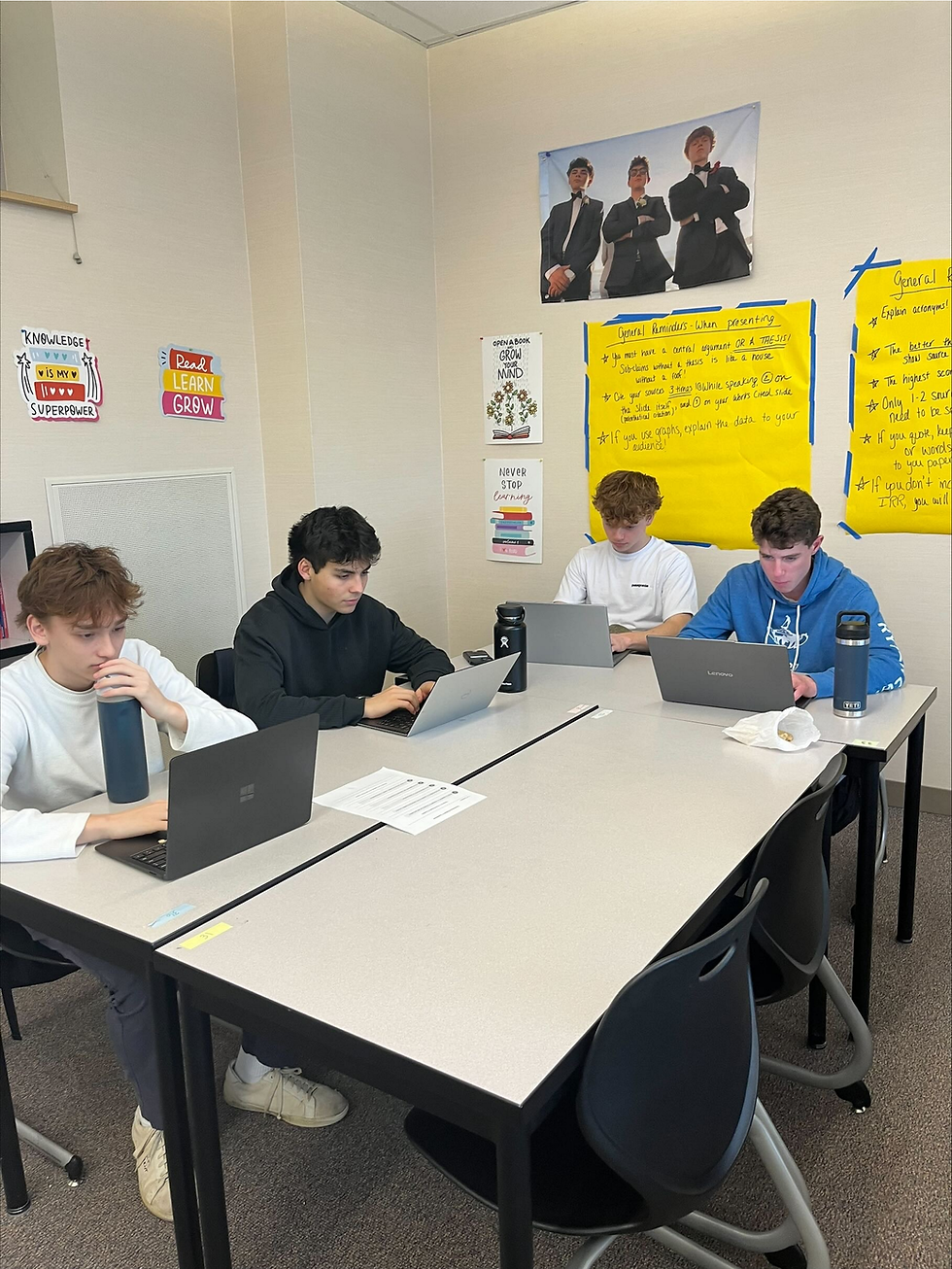
Imagine it’s the end of the unit, and as you anxiously wait for your teacher to announce the final exam, they inform everyone that it’s going to be a group project. What a nightmare.
Group projects are one of the most common methods teachers use to measure their students’ understanding of course content, but instead of assessing collaboration and better efficiency, group projects usually achieve the opposite result.
“Group projects aren't effective because instead of teaching teamwork, they often result in ‘takeover’ by certain students while others free ride on the work of others, and the overall grade fails to accurately reflect contributions,” senior Elliana Nan said.
In a typical group project at Bellevue High there are three kinds of people: the slackers, the leaders and the stubborn. Slackers are the ones that rely on others to finish their work and an hour before the deadline, ghosts the Teams group chat. They are a nightmare for teamwork and are the typical suspects for a failing project. Teachers believe that everyone will do their best in group projects when others are depending on them to receive a good grade, but slackers simply don’t care.
“It’s annoying when a deadline is approaching and there is a lot of unfinished work. It isn’t fair to the other group members when that happens,” senior Elaina Hannon said.
Every group also has the leaders and facilitators of the group. Often, they are the ones brainstorming, organizing and communicating issues from student to teacher. They are the ones that take up more work and cover other members’ mistakes, but even they have their own problems. Some leaders of groups dominate conversation and do not allow others to contribute to the project, and some leaders that take up too much work, eventually burn out and complain about their circumstances.
These dominant leaders also connect to the stubborn members of a group project. The stubborn are those that are adamant about their ideas and are not open to collaboration or compromise with other group members. They hinder progress for the entire group and make it difficult for all group members to complete their parts.
Oftentimes, teachers mistakenly believe that group projects are easier on their students as the effort and grade are shared among all members. A possible solution to group projects is separate grades for each student so performance is measured on the individual, that way students can take responsibility and credit for their work.


